Yes, we've slipped back to C after only a brief foray into D-land. Sorry.
Character-led fiction is those series of stories that are initiated by the publisher and often written by a whole team of writers. The first famous one was probably Animal Ark, written not by Lucy Daniels but by a collection of writers-for-hire. Publishers like character-led fiction because they don't have to pay very much for it and these series usually sell lots of copies.
The degree of control you are given over the story varies between publishers and lists. You may be supplied with a title, a set of characters, a plot outline and a 'bible' that will cover all the details that need to stay the same between volumes, such as the name of the protagonist's dog, their parents' jobs and do on. It really is like painting by number but with words. At the other end of the scale, you might just be given a title and the characters. Although this gives you more freedom, there is also a much greater chance of the editor coming back with niggles such as 'your plot is too similar to writer x's plot' or 'oh dear, the dog is called Slug in the other book...' (Problems which could have been avoided by having a bible.)
You won't have your name on any character-led fiction you write, which is probably a good thing as it tends to be anodyne and unchallenging. If you're given a full plot, it's not very interesting to write. But it can be a useful way of giving yourself a bit of training (at least in obedience) and gives you the chance to write in a style you might otherwise never try .
The pay varies. You might get a small royalty, or you might get a flat fee. You should try to make sure you get the PLR. If you can knock them off quickly and don't mind feeling like a writing slut, they're quite a useful source of income. It's not high art, but you can get some satisfaction from writing within strict boundaries and it can hone your plotting and character development skills. It's the equivalent of practising your scales, really. If you want to give it a go, Working Partners is a good place to start.
Before you attack my snobbish attitude, I'll just point out that I have actually done it and I am absolutely a writing slut - I'll write almost anything if someone is going to pay me.
.
Wednesday, 24 August 2011

Tuesday, 9 August 2011
Over at ABBA
Talking about the digital bits (and pieces) that have to be marshalled once you pick a book or series title.


Wednesday, 3 August 2011
Title troubles: Munching on the winding-sheet?
Which comes first, the story or the title? Or even the cover image?
Are you any good at titles? I am sometimes good at titles. In the current week, I'm having to come up with no fewer than seven titles. Yes, seven. (But in case you think I am some kind of title-machine, you should know that I have a book I've been working on for years that doesn't have its final title yet.)
Four of the needed titles are for books in a series that includes books by other writers and have to fit into the greater scheme of things. They are rather formulaic and only one is proving at all difficult.
The other three are more important, and wholly mine, as they in my Vampire Dawn series. They have to work with books that are not yet written. We have likely cover images for two, and some content for two (not the same two). I came up with three titles today, but will probably keep only one of them, and that's Shroud-eating for Beginners. But maybe the publisher won't like it, and it will go back in the box of titles, perhaps to resurface later. Some titles are too enticing not to use.
One of the Vampire Dawn books, Dead on Arrival was inspired by the cover picture (you can see it on Facebook). It was one of a batch of pictures my lovely publisher found and sent to me - it was far and away the best and has set the style for the series.
But where does a title come from? I drove back from St Albans today trying to think of three Vampire Dawn titles. I think the process went like this: 'Think of words associated with death: dead, death, cemetery, graveyard, coffin, winding-sheet, shroud - ah, weren't vampires once called shroud-eaters? This is for new vampires, so...'
How do you come up with titles?
.
Are you any good at titles? I am sometimes good at titles. In the current week, I'm having to come up with no fewer than seven titles. Yes, seven. (But in case you think I am some kind of title-machine, you should know that I have a book I've been working on for years that doesn't have its final title yet.)
Four of the needed titles are for books in a series that includes books by other writers and have to fit into the greater scheme of things. They are rather formulaic and only one is proving at all difficult.
The other three are more important, and wholly mine, as they in my Vampire Dawn series. They have to work with books that are not yet written. We have likely cover images for two, and some content for two (not the same two). I came up with three titles today, but will probably keep only one of them, and that's Shroud-eating for Beginners. But maybe the publisher won't like it, and it will go back in the box of titles, perhaps to resurface later. Some titles are too enticing not to use.
One of the Vampire Dawn books, Dead on Arrival was inspired by the cover picture (you can see it on Facebook). It was one of a batch of pictures my lovely publisher found and sent to me - it was far and away the best and has set the style for the series.
But where does a title come from? I drove back from St Albans today trying to think of three Vampire Dawn titles. I think the process went like this: 'Think of words associated with death: dead, death, cemetery, graveyard, coffin, winding-sheet, shroud - ah, weren't vampires once called shroud-eaters? This is for new vampires, so...'
How do you come up with titles?
.
Thursday, 28 July 2011
Putting all our eggs in the digital basket
"But will e-books make out-of-print history?"
The question (on twitter) came from Katherine Roberts, author of I Am the Great Horse and the Reclusive Muse blog. She is also the founder of Kindle Authors UK.
 The answer is both 'yes' and 'no', of course. Any author who cares enough and has even minimal technical ability can convert their out-of-print books into various e-book formats. As long as they own the copyright, of course. That last point means those interminable character-led series (Animal Ark, etc) will disappear as soon as the publisher can't be bothered with them. And no bad thing, you might think.
At the moment, everyone is in a honeymoon period with the Kindle, Nook and their cohort. They can do no wrong (unless you believe they will 'kill the book'). Perhaps this is because most writers and agents (and even publishers) embraced technology very late in the day. How many of you have a manuscript on a five-and-a-quarter-inch floppy disk, written in WordStar or View? I have. That book is out of print. And, to be honest, it would be easier to scan it in, OCR it, and lay it out again than to work from the files. I'd have to dig around in my historic computer collection for all the bits and remember how to use them, and then find a way of getting the stuff off (no USB, no internet connection - we're talking things that were operated by a keen hamster in a wheel).
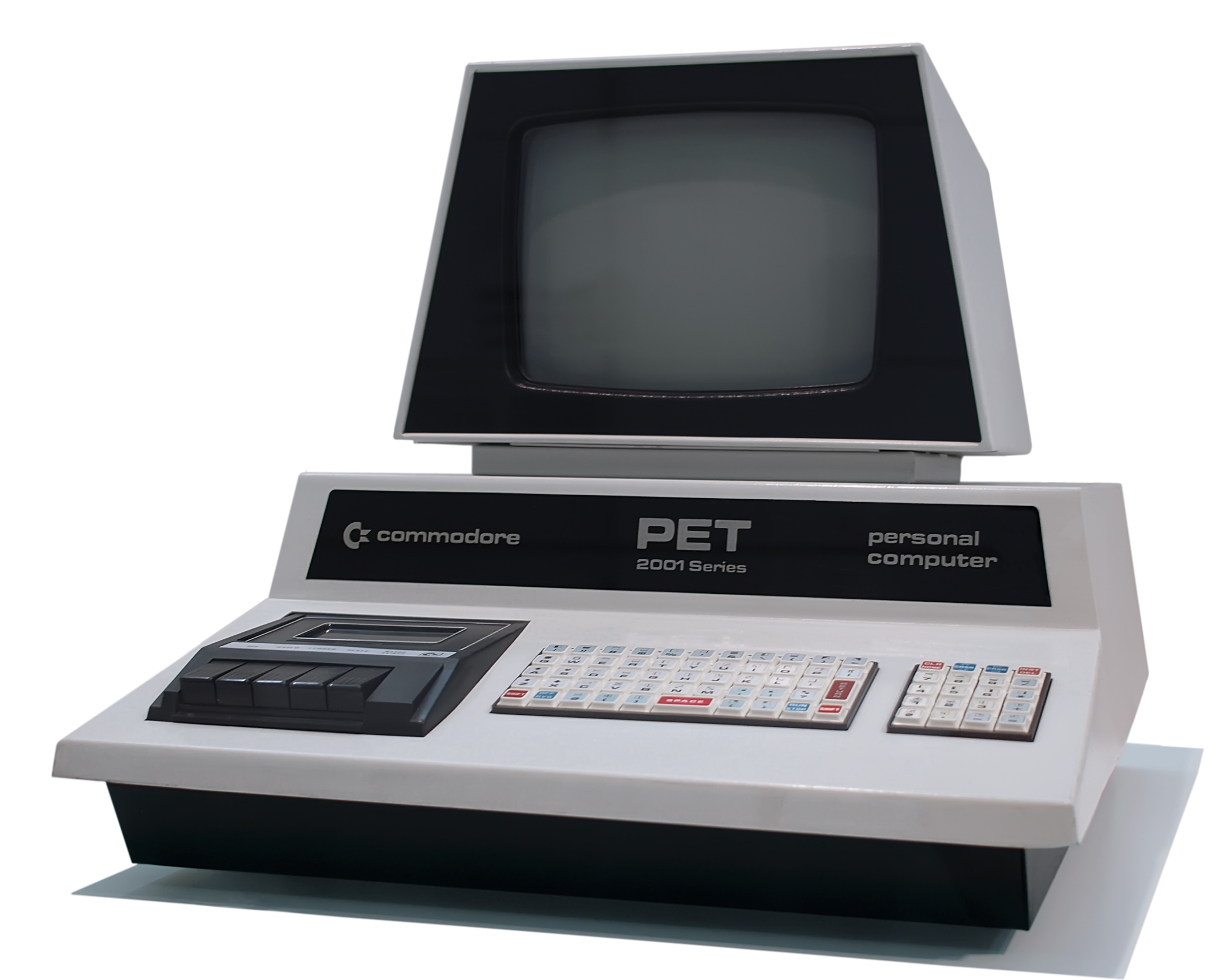 What did you do with your LPs? What did you do (if you're old enough) with your 8 mm home movies? What about those cassette tapes and video tapes? [Aside: I worked as RLF fellow in a university department where scriptwriting students had to submit their final pieces as audio cassette because that was what the rules still said. There was a healthy black market in C90s but a very long queue of people wanting to borrow the only known cassette recorder. This was 2008.] That's my first computer on the right: 1977. It used cassette tapes.
Just now, the iPad and the Kindle look shiny and new. Well, the iPad does. The Kindle, being mono, looks like a Z88 but relies on most people not remembering the Z88. Fast-forward 20 years. Actually, first of all, rewind 20 years. Let's line up our dinosaurs.
1991: No worldwide web (outside CERN); no text messages; no PDFs; no InDesign (1994); no Quark 3.3 (that was when it became real). We had email, of course, and the Internet for moving stuff. The book I published in 1991 was written (I think) on an Acorn Archimedes and delivered as a plain ASCII text file on a disk, with a paper print out. The book I delivered yesterday was written in Word, sent by email as a .docx file, and if I suggested posting any physical objects the publisher would think I'd gone mad.
Now let's go forwards. 2031: The Kindle will be a museum piece. Yes, of course data can easily be converted to other formats. Just like it's easy now to convert your WordStar documents. Ahem. You have to keep converting at every point of change or it gets hard. Try using your Quark 1.0 files now. It's always possible to write a converter - but as rule, it gets harder to use old files as time passes.
We will all be twenty years older in 2031. How much time will we be spending on converting our old books to new formats? Who will bother if we don't? Certainly not publishers, unless the book is a bestseller. Who will convert when you're dead? No one, probably.
 I could reproduce the book from 1991 now because I have a printed copy. I had an electronic publishing business in the 1990s. Nothing we published can be read on modern technology, even though it was distributed on CD-ROMs. It was a proprietory format (like Kindle is). This doesn't bother me - the need for those books has passed. But it's a salutary warning.
 Most of our e-books will disappear into the ether over time. They will be worse than out of print. You can get an out of print book in the library. I spent years working on books that had been their version of 'out of print' for 700 years. Digital archiving is a good and useful thing as long as we don't destroy the physical copies in our arrogant assumption that our formats are forever. But in two hundred years, will anyone be able to read a Kindle book? Will they in forty years? If we really needed to, we could convert something, yes. But not as easily as we can call up a physical book from the British Library stores.
If we write only for Kindle, we should consider those books to be more like magazine articles. Ephemeral, delivered for obsolescent technologies, ghosts of books. That's not inappropriate for many books, but some writers think they are writing for eternity (or at least for future generations). And as someone who has used a lot of popular culture for research, and found the copyright libraries lacking even in printed material, it will be a significant loss to future social historians. They'll have this year's vampire novels in 2211, but will they have whatever the craze is in twenty years' time?
We like to write post-apocalyptic novels. Post-apocalypse, none of the e-books will be available. We'll be thrown back on those old books and manuscripts that can be read by candlelight, and the Kindle-generation of literature will be lost. So no, electronic publishing will not make OOP a thing of the past. It makes it a thing of the future.
The question (on twitter) came from Katherine Roberts, author of I Am the Great Horse and the Reclusive Muse blog. She is also the founder of Kindle Authors UK.
At the moment, everyone is in a honeymoon period with the Kindle, Nook and their cohort. They can do no wrong (unless you believe they will 'kill the book'). Perhaps this is because most writers and agents (and even publishers) embraced technology very late in the day. How many of you have a manuscript on a five-and-a-quarter-inch floppy disk, written in WordStar or View? I have. That book is out of print. And, to be honest, it would be easier to scan it in, OCR it, and lay it out again than to work from the files. I'd have to dig around in my historic computer collection for all the bits and remember how to use them, and then find a way of getting the stuff off (no USB, no internet connection - we're talking things that were operated by a keen hamster in a wheel).
What did you do with your LPs? What did you do (if you're old enough) with your 8 mm home movies? What about those cassette tapes and video tapes? [Aside: I worked as RLF fellow in a university department where scriptwriting students had to submit their final pieces as audio cassette because that was what the rules still said. There was a healthy black market in C90s but a very long queue of people wanting to borrow the only known cassette recorder. This was 2008.] That's my first computer on the right: 1977. It used cassette tapes.Just now, the iPad and the Kindle look shiny and new. Well, the iPad does. The Kindle, being mono, looks like a Z88 but relies on most people not remembering the Z88. Fast-forward 20 years. Actually, first of all, rewind 20 years. Let's line up our dinosaurs.
1991: No worldwide web (outside CERN); no text messages; no PDFs; no InDesign (1994); no Quark 3.3 (that was when it became real). We had email, of course, and the Internet for moving stuff. The book I published in 1991 was written (I think) on an Acorn Archimedes and delivered as a plain ASCII text file on a disk, with a paper print out. The book I delivered yesterday was written in Word, sent by email as a .docx file, and if I suggested posting any physical objects the publisher would think I'd gone mad.
Now let's go forwards. 2031: The Kindle will be a museum piece. Yes, of course data can easily be converted to other formats. Just like it's easy now to convert your WordStar documents. Ahem. You have to keep converting at every point of change or it gets hard. Try using your Quark 1.0 files now. It's always possible to write a converter - but as rule, it gets harder to use old files as time passes.
We will all be twenty years older in 2031. How much time will we be spending on converting our old books to new formats? Who will bother if we don't? Certainly not publishers, unless the book is a bestseller. Who will convert when you're dead? No one, probably.
If we write only for Kindle, we should consider those books to be more like magazine articles. Ephemeral, delivered for obsolescent technologies, ghosts of books. That's not inappropriate for many books, but some writers think they are writing for eternity (or at least for future generations). And as someone who has used a lot of popular culture for research, and found the copyright libraries lacking even in printed material, it will be a significant loss to future social historians. They'll have this year's vampire novels in 2211, but will they have whatever the craze is in twenty years' time?
We like to write post-apocalyptic novels. Post-apocalypse, none of the e-books will be available. We'll be thrown back on those old books and manuscripts that can be read by candlelight, and the Kindle-generation of literature will be lost. So no, electronic publishing will not make OOP a thing of the past. It makes it a thing of the future.
Wednesday, 27 July 2011
How to speak publisher - D is for deadline
Which is why I have been absent without leave for so long. Deadlines come first.
The deadline is the appointment you have made for delivering your manuscript (or corrections to it) to your publisher. The key phrase there is 'you have made' - you agreed to this deadline, so you have to meet it. It is impolite to miss an appointment you've made, and it is deeply unprofessional to miss a deadline you agreed to. End of.
If being professional and polite aren't that high on your list of priorities, you probably shouldn't be reading this blog as it is for people who want to be professional writers and I prefer polite people. But if you feel a lapse once or twice won't matter too much to your overall image, let's look at some other consequences. I suppose these are really the explanation of why it is unprofessional and rude to miss deadlines.
You are not working in a vacuum. When you deliver your manuscript, an editor will read it. If you are delivering corrections, a copy editor is waiting for it, possibly an illustrator and a designer. Some of these people might be freelance and will have set aside time to work on your book. If your book doesn't turn up, they will have wasted time that no one will pay for. They still have to do the work on your book when it comes in and will be paid the same, even though they spent a day watching re-runs of Futurama or weeding the garden. Then it will have a knock-on effect on their other projects, or they will have to work over the weekend to get the book back on schedule. Shame on you. Even if the next people in the chain are not freelance, they will be (quite reasonably) annoyed if their own work plans are disrupted by your inefficiency. Those others in the chain are people, not just editors - remember that.
If you are so late the book can't be dragged back onto schedule, the publisher might miss the slot booked to print the book. At the moment, printers are trying to claw their way out of the grave they've been pushed into and might be able to accommodate your book anyway - but don't depend on it, and don't depend on things always being that way.
If you deliver late, there will be less time for everyone else to work on your book, so there's a good chance it will be a worse book. Those people aren't messing with your book for the hell of it - their job is to improve it. Yes, it can be improved.
What if you really can't meet a deadline? First, work out why. Here are the possibilities:
1. A personal disaster has befallen you - someone close to you has died, your partner has left you, your house has burnt down, someone close to you is very ill and you are their carer (or shared carer), you have fallen ill (properly ill, not man-flu)
2. A technological disaster has befallen you - your file has become corrupted or been deleted, the laptop it was on has been stolen, your computer has been disabled by a virus
3. You've simply run out of time - you mismanaged your time and there is too much left to do, what you have written is rubbish, what you have written doesn't match the brief/outline, the structure you picked isn't working, you got scared/blocked and couldn't carry on.
And now the solutions/stern chat:
1. Not your fault. No one is likely to hold you to the deadline. Tell the editor as soon as you are able to or, if you are not able to, get a friend to email your editor and alert them to the problem. Then you can forget about the book for now and do what you have to do.
Don't do this if you have a cold or something short term. If you have broken your leg, that gives you a few days but unless you are an armless person who types with your toes, it won't stop you finishing the book after that.
2. Use the back up. You WHAT? You don't have one? You can now leave the blog - this is for people who want to be professionals.
If you don't have a recent back up, stay up all night recreating the book from an older back up and consider it a useful lesson. I recommend you don't tell your editor you lost the file - they will think you are a bozo (and they will be right). A virtual dog ate my homework. The physical lack of a computer might cost you a day while you track down a library where you can use one, or one you can borrow or lease. You can probably catch up that day, but if not you must explain to the editor what has happened and how you are solving the problem and how long it will take (no more than a day, remember)
3. This doesn't happen the day before the deadline - you see it coming. If you really, really can't recover the situation, you have to talk to your editor as soon as it becomes clear to you that you can't meet the deadline. The editor wants your book to work - it's a lot of aggro if it doesn't. You can ask them to help you by reading what you've done and suggesting a different structure, or how to get it back on track, or whatever is needed. They won't be happy, but they won't be as unhappy as if you don't do this and just don't deliver, or deliver rubbish.
It will not be the end of the world - they will help you, or fire you. They won't send round a hit squad or kill your children. To them, it's one of many books - it's only the centre of the universe to you. If it is commissioned non-fiction, they might get an editor to fix the mess. If the mess is too messy, they might send you a kill fee and employ someone else to finish or rewrite it. I've done many a fix after a kill fee and I've also rewritten from scratch books that someone has screwed up or pulled out of. The industry has strategies to cope. It's more of a problem if you're writing a book someone else can't fix and it's in the catalogue already. Don't expect to be popular, but they will try to find a solution. For their benefit, not yours - it's not a favour. Don't ask them to publish your next book.
Things you must not do:
Lie about a major disaster that hasn't happened to you. How many mothers can you afford to kill off in the course of your career? Besides, now everything is transparent and you don't know who knows whom. You tell your editor you have to go to your mother's funeral and it's clear from Facebook you're shopping in Oxford Street. Your editor may not be your Facebook friend, but their flatmate/partner/parent/child/friend might be: 'My poor author, Stroppy, can't deliver because her mum died'. 'Oh, it says on her Facebook page she's going on a picnic with her daughters.'/'Oh, I know Stroppy - I'll send her a card.' See what I mean?
Just go off radar. Not responding to email and not answering the phone - for more than a day, when you might plausibly have network problems or be out - is cowardly and unprofessional. And unimaginative. You can do better than that.
Sending a garbled file (if you know how to make one - if not, learn). It can buy you a day at most. The editor should open it immediately to check it's readable (ie to check you haven't deliberately sent a garbled file) and then they will email you to ask you to resend it if they can't. If you're going to say later you were out, don't hang around on twitter saying 'yay, I finished my book, I'm going to have a coffee and read the paper'. I don't recommend the garbled-file route as you can't tell how much time it will buy you. If you only need another day, it will do. More than that, it's risky. If you have a trusting/lax editor they might not check the file until they want to start work on it, and that might be a week away. Then they will be embarrassed that they've left it so long, and you will have got lucky. But it might be tomorrow.
Make stupid excuses. Either be honest or be quiet.
On the whole, the more urgent the deadline, the more important it is to meet it. The deadline for an academic book may be years away, and in my experience the publishers will be so surprised if you deliver on time that they'll assume your book/contribution is not very good. That doesn't apply to real-world publishing, so if you're a refugee from academia, you're in for a surprise.
Oh, and one last thing. Your editors will really love you if you reliably meet deadlines. Which is stupid, but just goes to show how many people don't.
Now - don't you have a book to finish? Reading blogs is no excuse for missing your deadline!
.
The deadline is the appointment you have made for delivering your manuscript (or corrections to it) to your publisher. The key phrase there is 'you have made' - you agreed to this deadline, so you have to meet it. It is impolite to miss an appointment you've made, and it is deeply unprofessional to miss a deadline you agreed to. End of.
If being professional and polite aren't that high on your list of priorities, you probably shouldn't be reading this blog as it is for people who want to be professional writers and I prefer polite people. But if you feel a lapse once or twice won't matter too much to your overall image, let's look at some other consequences. I suppose these are really the explanation of why it is unprofessional and rude to miss deadlines.
You are not working in a vacuum. When you deliver your manuscript, an editor will read it. If you are delivering corrections, a copy editor is waiting for it, possibly an illustrator and a designer. Some of these people might be freelance and will have set aside time to work on your book. If your book doesn't turn up, they will have wasted time that no one will pay for. They still have to do the work on your book when it comes in and will be paid the same, even though they spent a day watching re-runs of Futurama or weeding the garden. Then it will have a knock-on effect on their other projects, or they will have to work over the weekend to get the book back on schedule. Shame on you. Even if the next people in the chain are not freelance, they will be (quite reasonably) annoyed if their own work plans are disrupted by your inefficiency. Those others in the chain are people, not just editors - remember that.
If you are so late the book can't be dragged back onto schedule, the publisher might miss the slot booked to print the book. At the moment, printers are trying to claw their way out of the grave they've been pushed into and might be able to accommodate your book anyway - but don't depend on it, and don't depend on things always being that way.
If you deliver late, there will be less time for everyone else to work on your book, so there's a good chance it will be a worse book. Those people aren't messing with your book for the hell of it - their job is to improve it. Yes, it can be improved.
What if you really can't meet a deadline? First, work out why. Here are the possibilities:
1. A personal disaster has befallen you - someone close to you has died, your partner has left you, your house has burnt down, someone close to you is very ill and you are their carer (or shared carer), you have fallen ill (properly ill, not man-flu)
2. A technological disaster has befallen you - your file has become corrupted or been deleted, the laptop it was on has been stolen, your computer has been disabled by a virus
3. You've simply run out of time - you mismanaged your time and there is too much left to do, what you have written is rubbish, what you have written doesn't match the brief/outline, the structure you picked isn't working, you got scared/blocked and couldn't carry on.
And now the solutions/stern chat:
1. Not your fault. No one is likely to hold you to the deadline. Tell the editor as soon as you are able to or, if you are not able to, get a friend to email your editor and alert them to the problem. Then you can forget about the book for now and do what you have to do.
Don't do this if you have a cold or something short term. If you have broken your leg, that gives you a few days but unless you are an armless person who types with your toes, it won't stop you finishing the book after that.
2. Use the back up. You WHAT? You don't have one? You can now leave the blog - this is for people who want to be professionals.
If you don't have a recent back up, stay up all night recreating the book from an older back up and consider it a useful lesson. I recommend you don't tell your editor you lost the file - they will think you are a bozo (and they will be right). A virtual dog ate my homework. The physical lack of a computer might cost you a day while you track down a library where you can use one, or one you can borrow or lease. You can probably catch up that day, but if not you must explain to the editor what has happened and how you are solving the problem and how long it will take (no more than a day, remember)
3. This doesn't happen the day before the deadline - you see it coming. If you really, really can't recover the situation, you have to talk to your editor as soon as it becomes clear to you that you can't meet the deadline. The editor wants your book to work - it's a lot of aggro if it doesn't. You can ask them to help you by reading what you've done and suggesting a different structure, or how to get it back on track, or whatever is needed. They won't be happy, but they won't be as unhappy as if you don't do this and just don't deliver, or deliver rubbish.
It will not be the end of the world - they will help you, or fire you. They won't send round a hit squad or kill your children. To them, it's one of many books - it's only the centre of the universe to you. If it is commissioned non-fiction, they might get an editor to fix the mess. If the mess is too messy, they might send you a kill fee and employ someone else to finish or rewrite it. I've done many a fix after a kill fee and I've also rewritten from scratch books that someone has screwed up or pulled out of. The industry has strategies to cope. It's more of a problem if you're writing a book someone else can't fix and it's in the catalogue already. Don't expect to be popular, but they will try to find a solution. For their benefit, not yours - it's not a favour. Don't ask them to publish your next book.
Things you must not do:
Lie about a major disaster that hasn't happened to you. How many mothers can you afford to kill off in the course of your career? Besides, now everything is transparent and you don't know who knows whom. You tell your editor you have to go to your mother's funeral and it's clear from Facebook you're shopping in Oxford Street. Your editor may not be your Facebook friend, but their flatmate/partner/parent/child/friend might be: 'My poor author, Stroppy, can't deliver because her mum died'. 'Oh, it says on her Facebook page she's going on a picnic with her daughters.'/'Oh, I know Stroppy - I'll send her a card.' See what I mean?
Just go off radar. Not responding to email and not answering the phone - for more than a day, when you might plausibly have network problems or be out - is cowardly and unprofessional. And unimaginative. You can do better than that.
Sending a garbled file (if you know how to make one - if not, learn). It can buy you a day at most. The editor should open it immediately to check it's readable (ie to check you haven't deliberately sent a garbled file) and then they will email you to ask you to resend it if they can't. If you're going to say later you were out, don't hang around on twitter saying 'yay, I finished my book, I'm going to have a coffee and read the paper'. I don't recommend the garbled-file route as you can't tell how much time it will buy you. If you only need another day, it will do. More than that, it's risky. If you have a trusting/lax editor they might not check the file until they want to start work on it, and that might be a week away. Then they will be embarrassed that they've left it so long, and you will have got lucky. But it might be tomorrow.
Make stupid excuses. Either be honest or be quiet.
On the whole, the more urgent the deadline, the more important it is to meet it. The deadline for an academic book may be years away, and in my experience the publishers will be so surprised if you deliver on time that they'll assume your book/contribution is not very good. That doesn't apply to real-world publishing, so if you're a refugee from academia, you're in for a surprise.
Oh, and one last thing. Your editors will really love you if you reliably meet deadlines. Which is stupid, but just goes to show how many people don't.
Now - don't you have a book to finish? Reading blogs is no excuse for missing your deadline!
.
Subscribe to:
Posts (Atom)